Showing posts with label Skin benefits. Show all posts

Thursday, March 1, 2018

Aloe Vera gel for Stretch Marks


Aloe vera has long been associated with its ability to heal the skin. You’ll find it in many beauty treatments, lotions, burn creams, and more. That’s what usually gets people wondering if it can help with stretch marks.
Also known as striae, stretch marks can be caused by a number of things but most commonly after giving birth.
Most people hate the way these look on their body and actively seek new ways to get rid of them with medical treatments.
In addition to stretch mark creams, aloe vera can be used as a supplement to help heal the skin, especially if you apply it early on. One of the foremost experts on skincare, the Mayo Clinic, has rated aloe vera products like gel and juice as a “C” on “A” to “F” scale for helping with stretch marks.
This makes the cheap and easily accessible plant an ideal source for healing stretch marks in addition to prescribed creams and bandages.

Applying Aloe Vera Get Stretch Marks

We have already made a number of articles that show you how to make your own aloe gel. Start by choosing the method that’s most convenient for you and making your own gel at home.
Of course, you can also go out and buy aloe gel at most stores; it’s just a lot cheaper. The reason being that you’ll need to apply aloe gel to the area of your body with stretch marks at least once a day, which can become costly.
To apply the solution, take a fingertip of the gel and rub it gently on your stretch marks, massaging it deeply into the skin.
As an added bonus, you might feel a sense of relief, as fresh stretch marks can be slightly painful. While aloe vera doesn’t heal the damaged skin completely, it has been seen to reduce the visibility of stretch marks considerably and have a soothing sensation to boot.

Wednesday, February 28, 2018

13 Surprising and Powerful Benefits Of Aloe Vera - How To Best Use It

You’ve probably used aloe vera before. After spending one too many hours baking in the sun, you may have slathered it on your skin, savoring the sweet cooling sensation. Aloe vera can be a sunbather’s best friend.
But did you know that aloe vera has loads of other uses? From soothing mouth ulcers to cleaning your teeth, you’ll be amazed at all the different ways it can be used. It’s one of nature’s most diverse plants in terms of uses.
Now, it should be noted that many of the claims made about aloe vera aren’t backed by scientific studies. In this post, we’re only going to include benefits that have at least some scientific backing. Some of the benefits may require more research, but at least initial evidence is in place.
We’re going to provide you with 13 other simples, yet powerful ways to use aloe vera.
Ready? Let’s get started.

What Is Aloe Vera?


Before we get into uses for aloe vera, let’s quickly talk about the plant itself.
It is a plant that grows in tropical climates for both agricultural and medicinal purposes. It typically grows to somewhere between 24-39 inches and has thick, fleshy leaves with a somewhat waxy exterior.
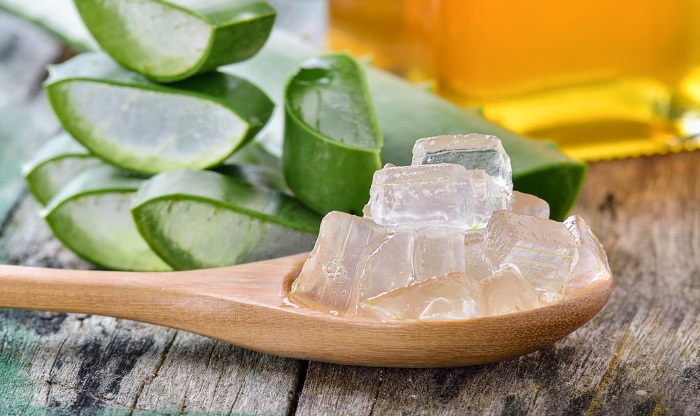
Inside, the leaves contain a gel-like liquid. Within this gel are a variety of useful compounds that give the plant its medicinal value, and it has long been valued for its various uses.
Now let’s dive into the uses for the plant.

#1 - Aloe Vera Contains Antioxidants and Antibacterials

It’s well established that antioxidants are incredibly useful for the body. They function as protectors of sorts, attaching themselves to harmful free radicals which can damage cells in the body.
The gel within the aloe vera plant contains antioxidants from a family of substances known as polyphenols.
The polyphenols, in combination with other compounds, work to inhibit limit the growth of harmful bacteria in the body.

#2 - Aloe Vera Can Reduce Dental Plaque


Got a nasty case of plaque in your mouth? Let aloe vera come to the rescue. 
A study of approximately 300 people compared aloe juice to standard mouthwash, which contains the ingredient chlorhexidine. 
After just 4 days of use, evidence suggested that the aloe vera was just as effective as a mouthwash. 
Given that aloe vera is a natural substance, it can be an outstanding healthy alternative to chemical-laden mouthwash.

#3 - Aloe Vera Allows Burns To Heal More Quickly 

Of course, aloe vera is useful for treating sunburns, but it has applications beyond that. 
A study suggested that the plant is effective in treating first and second-degree burns, reducing the healing time by as much as 9 days.
This is no secret, given that the FDA approved aloe vera as an over-the-counter option for skin burns all the way back in 1959. Despite this, many people assume it's only used is for treating sunburns.

#4 - Aloe Vera Can Function As A Laxative

Clogged up from eating the wrong foods? Aloe vera can aid your digestion by acting as a laxative. 
Surprisingly, it’s not the gel that does this, but the sticky yellow latex found under the skin of the leaf. This latex contains aloin, which has long been established as an effective laxative.
However, it should be noted that there have been concerns about using aloe vera as a laxative. Always talk to your doctor before using it.

#5 - Aloe Vera Can Help Mouth Ulcers


Mouth ulcers, also called canker sores, are painful sores that form in the mouth and often last for a week, or longer.
Several studies have indicated that aloe vera is an effective treatment for ulcers, both in speeding the healing and reducing the associated pain.
A 7-day study of 180 demonstrated that the plant is effective in reducing the size of ulcers.
Another study demonstrated that aloe vera can reduce the significant pain that often comes with canker sores.

#6 - Aloe Vera May Lower Blood Sugar In Diabetics

The jury is still out on this one, given that the research involved was rather poor. However, a few studies suggested that aloe vera might be able to help lower overall blood sugar in diabetics.
It does this by enhancing insulin sensitivity and improving the body’s ability to manage sugar. 
You should definitely speak to your doctor before using aloe vera though as there has been concern about the liver damage being caused. 
(note, Ceylon cinnamon may support healthy blood sugar levels in already healthy individuals)

#7 - Aloe Vera May Improve Skin Quality


Research is still being done, but it appears that aloe vera gel may reduce aging signs on the skin.
One study of women over the age of 45 showed that topical use of aloe vera gel could increase collagen production and increase skin elasticity. 
Another study showed that the gel could minimize redness of the skin.
Although it’s still early in the game, these signs are encouraging. 

#8 - Aloe Vera Can Soothe Rashes and Irritation

The plant has long been used as a home remedy to treat skin rashes and irritation, but evidence also backs this up.
A 2009 review of 40 different studies suggested that oral consumption of aloe vera can speed the healing of wounds and decrease the size of growths on the skin. 
Another study done in 1996 suggested that aloe vera is an effective treatment for psoriasis.
A 1996 study done at the Department of Clinical Physiology in Sweden included 60 patients with chronic psoriasis who participated in a randomized, double-blind, controlled trial of aloe vera or placebo cream. The cure rate in the aloe vera group was 83 percent (!) compared to only 7 percent in the placebo group, and there were no relapses reported at the 12-month follow-up.

#9 - Aloe Vera Can Ease Gastric Distress


Anyone who has experienced ongoing gastric distress knows the frustration of trying to find relief. Thankfully, aloe vera can provide that relief. 
One study on rats with gastrointestinal problems found that aloe vera significantly reduced the amount of gastric acid in their bodies. 
Another study on 30 patients with irritable bowel syndrome discovered that drinking 30 milliliters of aloe vera juice twice per day reduced the overall level of gastric discomfort.
Some of these benefits may be due to the laxative and anti-inflammatory properties of aloe vera, as well as the various anti-bacterial.

#10 - Aloe Vera May Help Fight Breast Cancer

It’s too early to tell, but early research suggests that aloe vera may be able to play some role in slowing the progression of breast cancer.
This benefit may be due emodin, which is found in the leaves of the aloe vera plant.
Of course, more research must be done to prove this theory, but the evidence is encouraging. 

#11 - Aloe Vera May Improve Cardiovascular Health

The research is limited when it comes to aloe vera’s effect on the cardiovascular system, but the existing research does indicate that the plant may improve overall cardiovascular health.
In a study published in the British Medical Journal, researchers suggested that orally administered aloe vera may be helpful in lowering blood lipid levels, which in turn may help regulate cholesterol levels. 
Considering that cholesterol is typically controlled by taking pharmaceutical drugs, this development is encouraging. 

#12 - Aloe Vera Can Ease Dandruff


Aloe vera can play a role in minimizing dandruff, thanks to its moisturizing properties, anti-inflammatory compounds, anti-fungal properties, and cleansing enzymes. 
Although additional research is needed to come to a firm conclusion, the evidence suggests that the plant can be an effective remedy.
Given that anti-dandruff shampoos have numerous chemicals, this can be an outstanding option.
For ways to use aloe vera, read this article.

#13 - Aloe Vera May Protect Against Cavities 

A study from General Dentistry compared aloe vera in tooth gels to standard toothpaste. They found that, in some cases, aloe vera is just as, if not more effective than standard toothpaste.
Some of this benefit may be due to the antibacterial compounds found in the plant.

Conclusion

Aloe vera is a powerful plant with a variety of uses. As research continues we should expect to see even more uses emerge from the plant, which is certainly encouraging.
Given that aloe vera does not contain many of the abrasive, harmful chemicals found in traditional over-the-counter medicines, it should certainly have a place in your medicine cabinet. 
As noted above, you should consult with your doctor before administering aloe vera. It’s always better to have the advice of an expert.

Tuesday, February 27, 2018

Can Aloe Vera treat psoriasis?


Psoriasis is a long-term condition that causes excess skin cells to form inflamed, red, and scaly patches on the skin. Can aloe vera help manage the symptoms of this condition?

Psoriasis is caused by a problem with the immune system and does not currently have a cure. Also, up to 30 percent of people with psoriasis go on to develop psoriatic arthritis.
This article explores the potential benefits of aloe vera as a treatment for psoriasis and considers the scientific evidence available to support its use.

Does aloe vera help psoriasis?

Psoriasis causes painful and uncomfortable patches of inflamed skin. Sometimes these patches can crack and bleed.

If psoriasis starts to affect people's joints, it is called psoriatic arthritis. Psoriatic arthritis can cause a person's joints to become swollen, stiff, and painful.
Aloe vera is a type of succulent with gel-filled leaves. Applying pure aloe vera gel to psoriatic skin patches may have a soothing effect, reduce inflammation, and improve hydration. It may also be beneficial for the treatment of psoriatic arthritis.
Some studies suggest aloe vera gel can help manage specific symptoms associated with psoriasis and psoriatic arthritis. However, there is not much evidence to support aloe vera gel as a stand-alone treatment, so a person with psoriasis should talk to their doctor about medicated creams and other remedies.

Benefits of aloe vera for psoriasis

A 2012 study found aloe vera gel to be over 81 percent effective in the treatment of psoriasis. However, this study used an animal model, so more research is needed to see if aloe vera gel has an equally beneficial effect on psoriasis in humans.
While the effects of aloe vera are unproven for psoriasis specifically, the following studies show it may be beneficial for certain symptoms:

Helps heal wounds

A 2015 review noted that aloe vera's healing property is related to a compound called glucomannan, which affects skin cell growth and accelerates wound healing.
As a result, the wound healing properties of aloe vera gel may be beneficial if a person with psoriasis has skin patches that crack or bleed.

Helps the skin to make collagen

Aloe vera gel may lead to the skin making more collagen. As well as contributing to the healing process, collagen helps to keep the skin elastic and firm.
The glucomannan contained in aloe vera encourages collagen production and collagen improves skin elasticity, so increased collagen production may help to reduce the scaly patches caused by psoriasis.
Reduces inflammation
Aloe vera gel may be able to reduce inflammation, which is a symptom of both psoriasis and psoriatic arthritis.
A 2008 study found aloe vera gel to be more effective than a placebo to treat skin conditions, such as UV-induced erythema. The study did not, however, look specifically at aloe vera's role in treating psoriasis.
More research is needed to say with certainty that the anti-inflammatory properties of aloe vera are beneficial for treating psoriasis.

Improves hydration

Aloe vera gel may help to improve skin hydration, although not when used on a regular basis.
A 2014 study found that aloe vera gel improved skin hydration after one application. However, after multiple uses, it decreased skin hydration.
Improved skin hydration may help a person with psoriasis prevent the patches on their skin from cracking. One-off applications of aloe vera gel could be useful in this way, but it may not be beneficial if used repeatedly.
More research is needed to see if aloe vera is a good moisturizer for people with psoriasis.

How to use aloe vera

Aloe vera gel is available over the counter at most pharmacies and health food stores.
People can also use aloe vera gel directly from the plant by snapping off a leaf and gently squeezing out the gel.
Aloe vera gel can be applied liberally to the affected areas of the skin up to three times a day.
Aloe vera is also available in tablet form. However, the National Psoriasis Foundation say aloe vera tablets are not beneficial for the condition.

Risks and considerations

Applying aloe vera gel to the skin is safe for most people, but some individuals may be allergic.

It is best to apply the gel to a small patch of skin to test for an allergy before using it more liberally. If there is no adverse reaction after 24 hours, it should be safe to apply aloe vera gel freely to the skin.
Also, some medications may interact with aloe vera gel. A person who is taking medications may wish to discuss aloe vera gel with their doctor before they start using it.

Other treatments for psoriasis

Aloe vera gel is a complementary treatment that may help manage psoriasis symptoms when used alongside other treatments.
Treatments that the doctor may recommend for psoriasis include:
  • salicylic acid
  • steroid-based creams
  • calcipotriene-containing ointments
  • coal tar ointments
Other home remedies for psoriasis that some people find beneficial include:
  • apple cider vinegar
  • dead sea salts
  • capsicum
  • tea tree oil

Takeaway

Some studies suggest that aloe vera gel may improve specific symptoms associated with psoriasis, due to its healing properties.

More research is needed to prove whether aloe vera gel is an effective treatment for the skin condition, as a whole. In the meantime, aloe vera is generally safe to use as a moisturizer and on skin affected by psoriasis.

Friday, February 16, 2018

9 Outstanding Benefits Of Aloe Vera For Skin


9 Outstanding Benefits Of Aloe Vera For Skin


The use of Aloe vera on the skin is a tradition that’s among the oldest natural health and beauty treatments in recorded history.
Hailed as the ‘plant of immortality’ by the ancient Egyptians, it was used by the celebrated queens Nefertiti and Cleopatra to maintain their famous beauty.
And the ancient Greeks and Romans employed it for uses as diverse as treating hair loss and healing the wounds of soldiers after battle.
The popularity of its use has continued through to modern times.
It’s regularly used in skin care for its ability to soothe and moisturize the skin. And it’s a popular salve for a range of skin disorders.
In this article, we’ll take a deeper look at the benefits of Aloe vera for skin.
And then I’ll show you a few of the ways that you can easily get started using it at home.

What Is Aloe Vera?

First of all, let’s take a look at what it is.
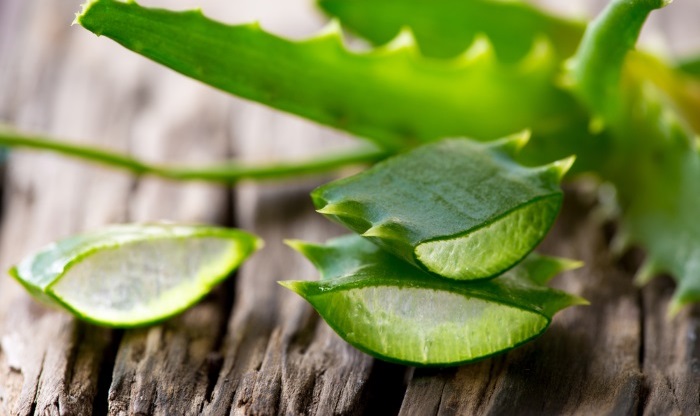
Aloe vera is a small perennial shrub with thick, triangular, and fleshy green leaves.
Also commonly known as Aloe barbadensis miller, it’s believed to have originated in Sudan before being spread to the Mediterranean region in antiquity, and subsequently around the rest of the world in tropical climates.
Prized for its healthy healing properties, the manufacture of the extract from the plant is amongst the largest botanical industries on the planet.

Composition

Aloe vera contains a huge number of potentially bioactive compounds.
In fact, the number of identified compounds that can interact with your body and skin currently stands at more than 75 and includes the following (1):
  • Vitamins
  • Enzymes
  • Minerals
  • Sugars
  • Phenolic Compounds
  • Fatty Acids
  • Hormones
  • Amino Acids
  • Salicylic Acid
  • Lignins
  • Saponins
These are found in the juice of the plant, and the clear gel that’s contained in the inner layer of the leaves.
It’s the gel that’s most commonly used by people for skin care. But, drinking the juice is also claimed to have health benefits.

Is Aloe Vera Good For Your Skin?

The history of scientific research into the beneficial properties of Aloe vera for the skin has produced some positive results in support of its moisturizing, protective, and healing properties.
However, the evidence obtained is not always strong enough to be considered conclusive.
Undoubtedly, there is a need for larger controlled trials to take place to fully evaluate its effectiveness in the areas in which it has shown promise.
A lot of the evidence to support its use is anecdotal, and Aloe vera remains very popular with natural health and beauty enthusiasts for its perceived benefits for skin.
It’s frequently included in skin care preparations and can be found in a range of personal care and beauty products including soaps, facial moisturizers, sun lotions, shampoos, makeup, shaving creams, and body lotions.

Benefits & Uses


Moisturizing

Aloe vera is well known for its ability to moisturize the skin.
It contains mucopolysaccharides which are thought to aid skin hydration by acting as humectants that attract and bind moisture, preventing its loss.
In one study that looked at the effect on skin hydration of different concentrations of Aloe vera extract in a cosmetic formulation, it was shown that the extract had a positive effect on the water content of the stratum corneum (2).
The final conclusion was:
Our results show that freeze-dried Aloe vera extract is a natural effective ingredient for improving skin hydration, possibly through a humectant mechanism. Consequently, it may be used in moisturizing cosmetic formulations and also as a complement in the treatment of dry skin.
One of the great things about it is that it doesn’t leave a greasy finish to your skin.
And in contrast to some of the popular facial oils, it won’t block your skin pores which can lead to breakouts. This makes it good for use by people with dry skin, and those with oily skin.

Anti-aging

Not only will moisturization improve the appearance of your skin, but Aloe vera could also have exciting anti-aging benefits that could help it to look more youthful as you age.
Aloe vera is rich in antioxidants, including the vitamins C and E, beta-carotene, and phenolic compounds that can neutralize the free radicals that are created in the skin after exposure to UV light.
Damage caused by these free radicals can affect the structural proteins of the skin giving rise to lines and wrinkles.
In addition, it’s been observed that topical application of Aloe vera results in the generation of an antioxidant protein called metallothionein in the skin.
This protein helps to protect against UV radiation by scavenging free radicals and prevents the suppression of superoxide dismutase and glutathione peroxidase, two important enzymes in the skin that protect against oxidative damage.
And it doesn’t stop there.
It also has a stimulatory effect on fibroblasts in the skin, which are responsible for producing collagen and elastin (3). This could help to increase the elasticity of the skin, reducing the appearance of wrinkles.
In a study that looked at the effect of dietary Aloe vera gel on aging skin, supplementation for 90 days resulted in a significant improvement in facial wrinkles and increased elasticity (4).

Acne

As a natural treatment for acne and pimples, Aloe vera appears to have a lot going for it.
Some of its constituents have proven antibacterial properties and can kill harmful bacteria on the skin, and it contains compounds that have an anti-inflammatory effect that could be useful in treating an inflammatory condition like acne.
There’s also a huge number of anecdotal reports from people who have successfully used it as part of their acne treatment.
But unfortunately, we still await clinical trials that can demonstrate exactly how effective it is.
However, there is some recent evidence that supports its use.
In a 2014 study, the combination of Aloe vera gel with topical retinoids was found to be better at treating acne than the retinoids on their own (5).
60 patients with mild to moderate acne were split into two groups of 30. Group 1 was treated with 0.05% tretinoin cream. Group 2 received a 0.05% tretinoin cream that contained 50% Aloe vera gel.
The two groups used the cream for 8 weeks after which their condition was assessed.
The tretinoin and Aloe vera gel group showed a significantly better improvement in both non-inflammatory and inflammatory lesions compared to the other group.

Skin Conditions

Because it contains a number of bioactive compounds with anti-inflammatory properties, you would think that Aloe vera would also show promise as a treatment for other inflammatory skin conditions.
And it’s starting to look like that might be the case.
Anecdotal evidence has long suggested its use for the treatment of skin problems such as eczema, dermatitis, and psoriasis.
And although larger clinical studies are needed to gain conclusive data, there are some scientific studies that support its use.
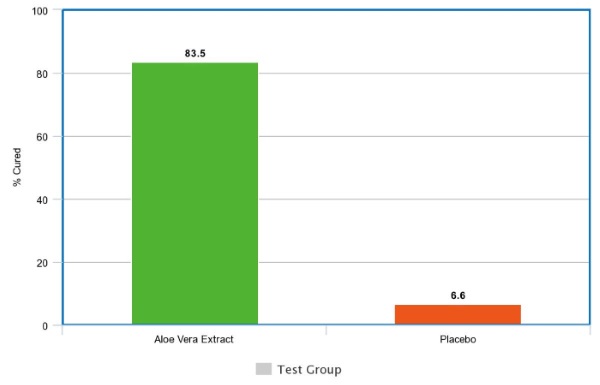
In one study, 60 patients with psoriasis were recruited for a placebo controlled comparison (6).
They were split into two groups of 30, with one group applying Aloe vera extract in a hydrophilic cream, and the other applying the placebo cream without the extract.
The study ran for 16 weeks, with monthly follow-ups for a further 12 months. The end results of the study were that 83.5% of patients using the Aloe vera extract cream were cured. Only 6.6% of patients using the placebo cured their psoriasis.

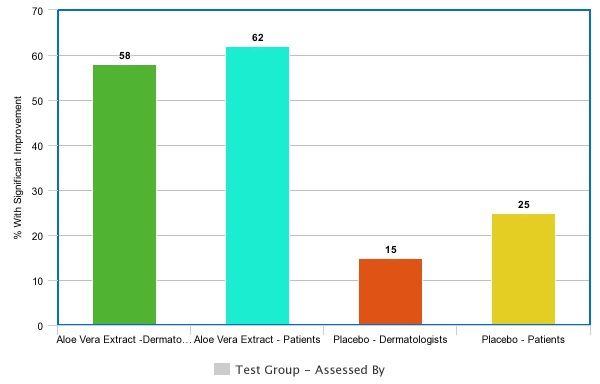
In a different study into the effects of Aloe vera extract on seborrheic dermatitis, 44 patients were split into two equal groups and treated with either an emulsion formulated from the extract or a placebo (7).
Comparison of the two groups after treatment showed a significant improvement in symptoms in the group treated with Aloe vera extract compared to the control group.
The global improvement rate as assessed by dermatologists was 58% for the Aloe extract group and 15% for the placebo group. As assessed by the patients themselves it was 62% and 25%.
The conclusion of the study was as follows:
The results of the present study indicate that Aloe vera (A. barbadensis) crude extract emulsion is effective in the therapy of patients with seborrheic dermatitis.

Sunburn

One of the most common uses of Aloe vera is to soothe sunburn.
With its ability to hydrate the skin and relieve inflammation it can reduce the itchiness and stinging that can develop after excessive sun exposure.
In one study that looked at the ability of Aloe vera gel to reduce UV induced redness of the skin, a significant improvement was seen compared to a control group that used a placebo gel (8).
This supports its use in aftersun lotions and as a simple home remedy.

Anti-fungal

Aloe vera extract contains a number of known antiseptic agents that can inhibit the growth of fungi.
These include salicylic acid, lupeol, cinnamonic acid, urea nitrogen, sulfur, and polyphenols.
This could make it useful for treating harmful fungi that infect the skin. For example, salicylic acid is known to inhibit Candida albicans (9).

Wounds & Burns

One of the traditional uses of Aloe vera that has attracted a lot of scientific attention is its ability to aid the healing process.
A number of studies on both animals and people have returned encouraging results when looking at wounds and burns.
Aloe contains a polysaccharide called glucomannan and a growth hormone called gibberellin that interact with fibroblasts in the skin, stimulating their proliferation and increasing the production of collagen and the degree of collagen cross-linking (1).
And an increased synthesis of dermatan sulfate and hyaluronic acid can be seen at the wound site after oral consumption and topical application in animal studies (10).
This helps to accelerate wound contraction and the rate at which it heals.
Studies into the healing of burns involving human patients suggest that Aloe vera might be effective at improving the healing of first and second degree burns (11).
And there is a small study that demonstrated the ability of Aloe vera and collagen plastering to completely heal a leg ulcer (12).
Promising results, and the evidence suggests it could help you to add some Aloe vera gel to any cuts, scratches, or minor burns you pick up. But more research will be required to further examine and confirm its wound healing potential.

Razor Burn

Shaving your skin can literally be a pain. It can leave your skin feeling dry, sore, and itchy, and can result in unsightly razor bumps.
Fortunately, the soothing anti-inflammatory properties of Aloe vera make it a great aftershave lotion or a key ingredient in a homemade shaving gel.
It moisturizes the skin and relieves the itching, leaving your skin feeling soft, smooth, and irritation free.
Here’s a simple recipe you can use to make an Aloe vera shaving gel:
Directions For Use:
1. Purchase a jar of organic Aloe vera gel, a bottle of organic argan oil, and a bottle of rose essential oil (or an essential oil that you prefer).
2. Get a small jar with a lid to keep the shaving gel in.
3. Use a tablespoon to measure out 3 parts gel to 1 part argan oil into the small jar.
4. Add 6 drops of essential oil for every tablespoon of ingredients already added.
5. Mix the ingredients together.
6. Use your fingers to spread the shaving gel on the area of your body you are about to shave.
7. Keep the jar with its lid on in a cool, dark place when not using it.

Hyperpigmentation

Exposure to UV light from the sun, inflammation, and hormonal changes are all common occurrences that can lead to an overproduction and accumulation of melanin in the skin and the appearance of dark spots.
Fortunately, there is some evidence to suggest that Aloe vera could have a use for reducing areas of hyperpigmentation, including age spots and melasma.
Studies in animals have shown that the aloin it contains can reduce the appearance of melanin in the skin causing skin lightening (13).

How To Use Aloe Vera For Skin

Aloe vera can be used on its own or in combination with a range of natural skin care ingredients to make face masks and lotions.
Here are some recipe ideas that you can consider trying:

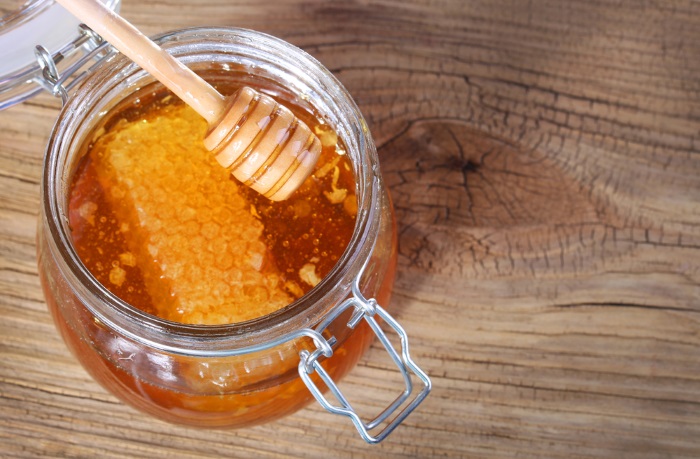
Honey & Aloe Vera Face Mask

Honey helps to moisturize and gently exfoliate, leaving soft, smooth, and glowing skin.
Directions For Use:
1. Get a jar of raw, organic honey, and a bottle of Aloe vera gel.
2. Get a small bowl.
3. Add 1 tablespoon of the honey and 1 tablespoon of the gel and mix together.
4. Apply the face mask using your fingers.
5. Leave the mixture on your skin for approximately 20 minutes before washing off.

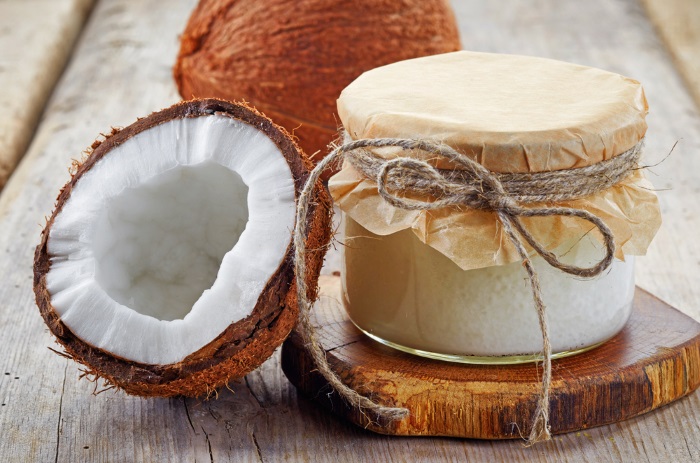
Coconut Oil & Aloe Vera Moisturizer

Coconut oil moisturizes the skin and helps to protect it from aging. It can also help to relieve skin conditions like eczema and psoriasis.
Directions For Use:
1. Get a bottle of organic, virgin coconut oil and a bottle of Aloe vera gel.
2. Put ½ a cup of the gel into a bowl.
3. Add ⅓ of a cup of the coconut oil to the bowl and mix together using a hand or electric whisk.
4. If you want to add several drops of your favorite essential oil, do so before you mix the ingredients.
5. Put the moisturizer into a small glass jar with a lid.
6. Use your fingers to apply the moisturizer to your skin.
7. You can use this on your face everyday and overnight.
8. Keep the jar in the fridge for future use.

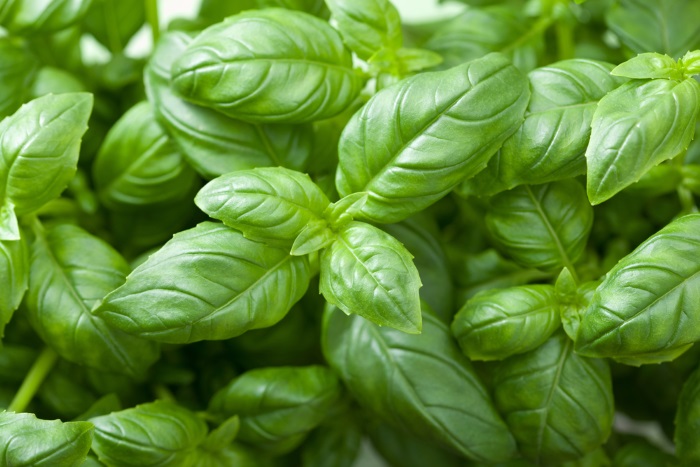
Basil & Aloe Vera Lotion


Basil essential oil has antioxidant and anti-inflammatory properties. And studies have demonstrated that when combined with Aloe vera the two together have an enhanced acne fighting effect.
Directions For Use:
1. Firstly you need to purchase a bottle of basil essential oil and a bottle of Aloe vera gel.
2. A 1 tablespoon of the gel into a small bowl.
3. Add 6 drops of the essential oil and mix together.
4. Spread the mixture over your skin with your fingers.
5. Use daily for best results.

Side Effects & Precautions

  • The majority of people find that Aloe vera is soothing and moisturizing for the skin.

    However, a small minority of people report that it can cause skin irritation, a burning sensation, and generalized dermatitis in people with sensitive skin.

    Before using it for the first time you should test if you have an allergic reaction to it. Rub a small amount into the back of your arm and leave for approximately 20 minutes.

    If you suffer a reaction then discontinue use.

Related Questions

Is Aloe Vera Good For Scars?
This is a claim that’s widely made on natural health websites online. But unfortunately there’s no evidence that Aloe vera will significantly reduce the appearance of existing scars, and no obvious reason why it would do either.
Anecdotal reports suggest that it can help to fade the sort of skin blemishes seen after acne lesions have healed, but it’s unlikely to actually remove acne scars.
Because studies indicate the possibility that it can increase the rate of wound healing there’s a chance that it might lead to better scarring after burns and wounds have healed. But this has not been examined in clinical studies.

Can Aloe Vera Help Stretch Marks?
Anecdotal reports have suggested that Aloe vera could help to reduce the appearance of stretch marks, but there’s no scientific evidence to support these claims.
It’s unlikely to remove existing stretch marks.

Can Aloe Vera Help Rosacea?
Aloe Vera has anti-inflammatory properties that could help to calm the inflammatory manifestations of the condition (14). But no scientific studies have actually measured its effectiveness.

ALOE VERA: THE SKIN-HEALING PLANT OF THE DESERT

Over 5,000 years ago, aloe vera was hailed as the   "Plant of Immortality"   in ancient Egypt. It was used by the likes of Cleo...